Agent Access Model Expands Persistent-Agent Attack Surface
Brokered agents store long-lived credentials and outbound tunnels that can bypass Zero Trust. Prioritize agent lifecycle, credential hardening and host segmentation.
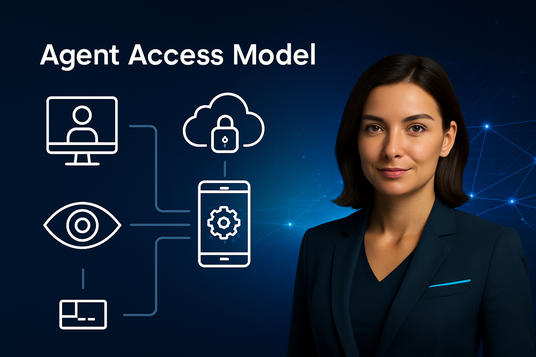
In brief
- Persistent, brokered endpoint agents store long lived credentials and maintain outbound brokered connections, expanding the attack surface and enabling bypasses of conventional SASE and Zero Trust chokepoints.
- Operationally, compromised agents increase blast radius and lengthen remediation windows because persistent brokered tunnels and credentials can evade network chokepoints, raising detection and containment costs.
- Leaders should examine agent lifecycle controls, local credential hardening, strict host segmentation, broker trust models and telemetry to reduce single host compromise impact and shorten mean time to recover.
The problem
The move to persistent, brokered endpoint agents has created a distinct operational risk: these agents commonly hold long‑lived credentials and maintain outbound brokered tunnels that can bypass SASE and Zero Trust chokepoints. Operationally, that raises the likelihood a single compromised host will expand blast radius and extend remediation windows, so buyers should treat agent lifecycle controls, local credential hardening, and strict host segmentation as first‑order mitigations to contain compromise and limit detection and containment costs.
Why this happens
The source event is the shift to persistent, brokered endpoint agents that keep long‑lived credentials and maintain outbound brokered tunnels. Mechanistically, those two properties combine to create a durable foothold: long‑lived local secrets let an attacker re‑authenticate without re‑compromising upstream identity flows, and brokered egress can carry control channels around conventional SASE/Zero Trust chokepoints and network inspection. The operational outcome is measurable — single host compromises can materially increase blast radius and lengthen mean time to recover because persistence plus bypassed chokepoints raise detection and containment costs. Teams often under‑estimate this risk by assuming existing SASE/Zero Trust controls or standard IAM practices already cover agents — in other words, that outbound brokered connections are innocuous and credentials are short‑lived. That mistaken assumption hides concrete failure modes: missing agent lifecycle controls, weak local credential hardening, insufficient host segmentation, and opaque broker trust/telemetry. Buyers should therefore make agent lifecycle (rotation/revocation), local secret minimization/rotation, strict host segmentation and broker trust telemetry first‑order controls to reduce single‑host impact, shorten remediation windows, and limit compliance and FinOps exposure.
Framework
Agent Lifecycle Controls
Given the shift to persistent, brokered agents, verify automated registration, short‑lived credentials and immediate revocation: force credential TTLs to minutes‑to‑hours, require re‑attestation on restart, and test revocation end‑to‑end so a compromised host cannot re‑authenticate; this reduces mean time to recover and limits a single host from regaining persistent access.
Local Credential Hardening
Because agents often hold long‑lived local secrets, minimize on‑host credentials and apply hardware‑backed storage and process isolation (TPM/SEV/DPAPI, vaulted short‑lived tokens, runtime memory protections) so extracted artifacts cannot be reused to re‑establish access; this materially lowers the risk of durable footholds from disk or memory compromise.
Broker Trust and Telemetry
Since brokered outbound tunnels can bypass SASE/Zero Trust chokepoints, require mutual broker authentication, per‑session cryptographic identifiers, and comprehensive session telemetry (host ID, user, key thumbprint, timestamps) streamed to detection tooling within operational SLAs; trustworthy broker telemetry is the primary control to detect, correlate and rapidly revoke misused channels.
Strict Host Segmentation
Because a single compromised agent can broaden blast radius, apply micro‑segmentation and host‑based egress policies that limit agent connectivity to explicit broker and management endpoints and separate the management plane from application traffic; this containment reduces lateral movement and shortens containment effort at the cost of added orchestration and configuration discipline.
How to get started
- Rotate agent TLS/API credentials every 4 hours and automate rollout across environments.
- Require broker mutual authentication and per-session identifiers; reject unauthenticated outbound tunnels.
- Instrument agent session telemetry to SIEM: log host ID, key thumbprint, user, timestamps, and session duration.
- Limit agent egress via host-based policies: allow only broker and management endpoints.
- Test full revocation: compromise simulation to validate agent revocation within target 15-minute window.
Risks & trade-offs
Strategic zoom-out
The shift to persistent, brokered endpoint agents means operators should treat agents as a first‑class control plane: because agents commonly hold long‑lived credentials and run outbound brokered tunnels that can bypass SASE/Zero Trust chokepoints, expect a larger blast radius and longer remediation windows unless you change the operating model. Over the next 12–24 months prioritize investments in automated agent lifecycle (enforce credential TTLs in minutes–hours, require re‑attestation on restart, and validate full revocation in ≤15 minutes), local credential hardening (vaulted short‑lived tokens, hardware‑backed storage and process isolation), and broker trust/telemetry (mutual broker authentication, per‑session IDs, and session logs—host ID, key thumbprint, user, timestamps—streamed to detection tooling with sub‑5‑minute ingestion SLAs). Operational governance should codify KPIs—percent of agents on short TTLs, mean time to revoke, mean time to detect—and update incident playbooks to test compromise scenarios and host‑based egress policies that limit agent connectivity to explicit broker and management endpoints. These measurable changes reduce single‑host impact without requiring wholesale architecture rewrites.
Next steps we recommend
Run a concise agent‑access validation: verify agent credential TTLs are minutes‑to‑hours (rotate every four hours), enforce broker mutual authentication and per‑session identifiers, check session telemetry ingestion within SLAs, and validate revocation within 15 minutes; LoG Soft Grup can perform that focused exercise if you prefer external validation.