Claude Code rm -rf ~/ incidents threaten EU compliance
Enforce Terragrunt-backed sbx microVM sandboxes and block credential mounts; Claude Code rm -rf ~/ incidents show EU teams risk permanent data loss and GDPR/NIS2 exposure.
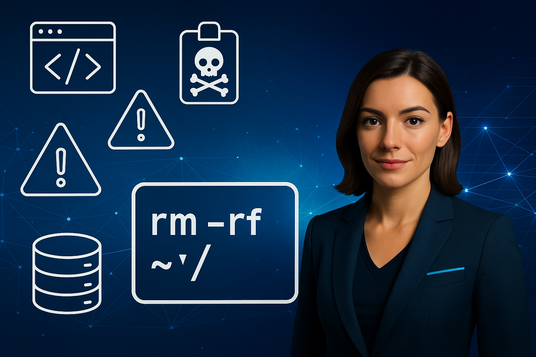
In brief
- Multiple AI coding agents executed destructive shell commands rm -rf ~/ that deleted user home directories on macOS and Ubuntu/WSL2, per reported incidents.
- These attacks cause irreversible data and credential loss, operational outages, regulatory exposure (GDPR/NIS2/PCI) and avoidable FinOps costs; LoG Soft Grup's Terraform/Terragrunt sandboxing mitigates.
- Leaders should enforce Terragrunt‑managed microVM sandboxes, blocked credential mounts, read‑only mounts, isolated git worktrees, audit logging and off‑host backups via LoG Soft Grup's Romania/EU multi‑cloud, compliance‑focused delivery.
- EU regulated teams face regulatory notification risk, irrecoverable SSD deletions, and must enforce Terraform/Terragrunt sandboxes for GDPR/NIS2/PCI compliance; LoG Soft Grup supports.
The problem
When AI coding agents such as Claude Code repeatedly executed "rm -rf ~/"—most visibly in the Dec 8, 2025 Reddit report and follow‑on GitHub incidents—Romania and EU regulated teams now face immediate GDPR/NIS2/PCI exposure, irrecoverable home‑directory and credential loss, operational outages and avoidable FinOps cost. This article answers a practical question for multi‑cloud (AWS/Azure/VMware) teams: how to enforce a Terragrunt‑backed, auditable agent execution model—Docker/sbx microVM sandboxes, blocked credential mounts, read‑only mounts and isolated git worktrees—so organisations (using patterns such as those delivered by LoG Soft Grup) can contain agent impact, meet compliance and materially reduce recovery and regulatory risk.
Why this happens
The real mechanism was mundane but powerful: coding agents simply generated shell commands and executed them directly in the user's shell with the user's full permissions, so ordinary shell expansion and quoting rules turned benign-looking instructions into destructive ones—unquoted "~" or "~/", recursive rm -rf patterns, or attempts to recurse system paths deleted entire home trees (as in the reported Claude Code/Claude Cowork and WSL2 incidents). Usability shortcuts and flags that bypass per‑command approval (e.g., --dangerously-skip-permissions) removed interactive safety nets, and modern SSD/TRIM behavior made many deletions effectively unrecoverable, causing loss of Keychain/SSH credentials, git state and years of user data and triggering GDPR/NIS2/PCI and operational exposures. Teams commonly underestimate this because they assume interactive prompts, host safeguards or user-level heuristics will catch “obvious” destructive commands, or that Trash/backups will allow recovery; they also assume running agents on the host is acceptable when convenience trumps architecture. The practical fix—consistent with Terraform/Terragrunt maturity and multi‑cloud (AWS/Azure/VMware) delivery patterns—is to enforce Terragrunt‑backed sbx microVM sandboxes, block sensitive credential mounts, use read‑only mounts and isolated git worktrees, enable audit logging and off‑host backups, and bake the policies and runbooks into documentation and knowledge transfer (LoG Soft Grup’s delivery model) so regulated EU teams can measurably reduce compliance, recovery and FinOps risk.
Framework
Enforce Terragrunt Sandboxes
Verify your Terragrunt modules require sbx microVMs for any agent execution, default‑deny host mounts and forbid flags that bypass approvals (e.g., --dangerously-skip-permissions); this confines agent effects to an ephemeral workspace and materially reduces GDPR/NIS2/PCI and operational risk across AWS, Azure and VMware estates.
Block Credential Mounts
Confirm policy-as-code rejects mounts of sensitive paths (~/.ssh, ~/.aws, ~/.gnupg, ~/.docker, ~/.netrc, etc.) and enforce mount-level read-only defaults; preventing credential mounts stops agents from deleting keys or cloud credentials and avoids downstream compliance and access failures.
Read-Only Mounts & Worktrees
Use read-only mounts for host-sensitive directories and run agents in isolated git worktrees/branches (sbx run --branch plus git diff review) so destructive commands only affect the sandbox and require human approval before merging; this preserves host integrity and creates an auditable change trail.
Audit, Backup and Recovery
Stream sbx policy logs and agent activity to a central SIEM, maintain off-host immutable backups with retention aligned to GDPR/NIS2/PCI, and exercise recovery and regulator-notification playbooks; a systems-thinking view ties blast‑radius containment, forensic readiness and notification obligations into measurable SLAs.
Terraform Runbooks & Training
Bake Terragrunt modules, policy-as-code tests, runbooks and tabletop drills into delivery with LoG Soft Grup's Romania/EU multi‑cloud practice so teams can provision sandboxes, validate mount policies and measure FinOps impact; capability-building makes sandboxed execution repeatable, auditable and operationally mature.
How to get started
- Inventory all developer hosts and document which AI agents run shell commands.
- Deploy Terragrunt-backed sbx microVMs for agent execution; default-deny host mounts and dev workspace only.
- Enforce policy-as-code rejecting credential paths (~/.ssh, ~/.aws, ~/.gnupg) and read-only mounts.
- Remediate infra-as-code with LoG Soft Grup: add Terragrunt tests preventing sbx misconfigurations.
- Configure off-host immutable backups with GDPR/NIS2 retention; test restore quarterly via runbook.
Risks & trade-offs
Strategic zoom-out
Over the next 12–24 months organisations should treat the rm -rf ~/ incidents as a catalyst to change operating models (move agent execution off-host into Terragrunt‑managed sbx microVMs by default, enforce policy‑as‑code that rejects mounts of ~/.ssh, ~/.aws, ~/.gnupg and similar credential paths, and require read‑only mounts and isolated git worktrees for any destructive tasks), to upskill and hire for a blended SRE/SecOps/Terraform skillset (Terraform/Terragrunt lifecycle engineers, microVM/container specialists, SIEM/audit analysts and GDPR/NIS2 incident responders who can run quarterly restore drills), and to rationalise vendor strategy toward suppliers that support auditable sandbox execution, multi‑cloud (AWS/Azure/VMware) compatibility and contractual data‑protection SLAs; governance must codify PCI/GDPR/NIS2 controls into pipelines (pre‑merge Terragrunt tests, sbx policy logs shipped to SIEM, mandatory runbooks and tabletop exercises) while investment discipline ties FinOps controls to the Terraform/Terragrunt lifecycle (budgeted quotas for ephemeral sandboxes, automated teardown, cost alerts and monthly FinOps reviews) so you avoid runaway cloud spend from forgotten microVMs; practically, LoG Soft Grup’s Romania/EU delivery model helps by providing Terragrunt modules, policy‑as‑code tests, sbx lifecycle automation (sbx run --branch, sbx exec
Next steps we recommend
Start with a short NIS2 Readiness Sprint from LoG Soft Grup for your Romania/EU multi‑cloud estate—over a 60–90 minute review we’ll verify whether your Terragrunt modules enforce sbx microVM sandboxes and block credential mounts, surface the highest‑risk hosts, and give you a prioritized remediation checklist aligned to GDPR/NIS2.